India and Nepal share a deep-rooted relationship built on history, culture, and geography.
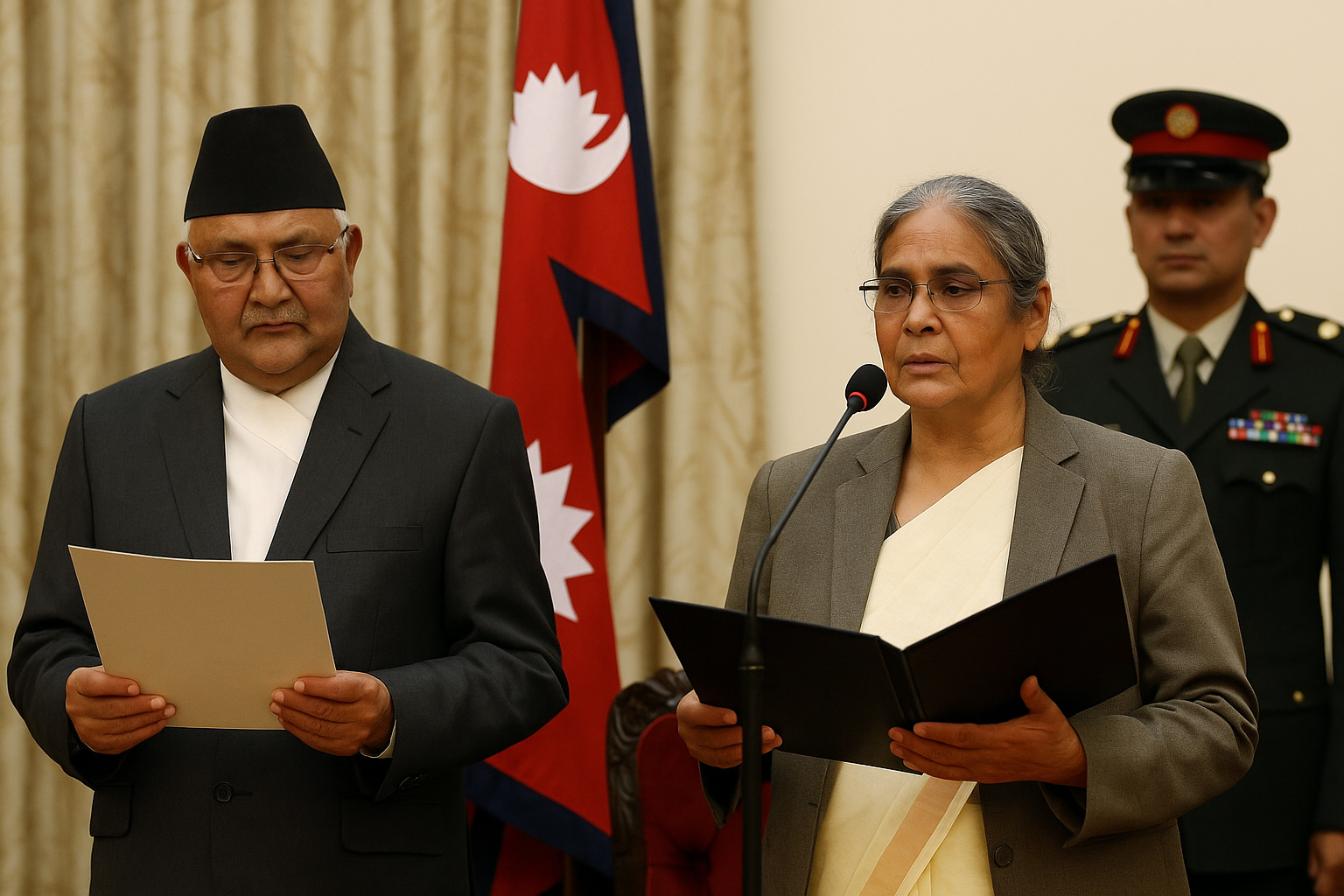
On September 12, 2025, Nepal witnessed a historic political shift when Sushila Karki, a former Chief Justice and anti-corruption activist, took oath as the country’s first woman interim Prime Minister.
Soon after her swearing-in, Indian Prime Minister Narendra Modi issued his first reaction, reaffirming India’s commitment to Nepal’s peace, progress, and prosperity.
The Historic Oath of Sushila Karki
The swearing-in ceremony was held at the President’s Office in Kathmandu, where Nepal’s President Ram Chandra Paudel administered the oath of office.
Karki’s appointment comes after weeks of political turmoil sparked by large-scale Gen Z protests against corruption and alleged misrule.
- First woman PM of Nepal: Sushila Karki rise is historic, breaking decades of political tradition.
- Anti-corruption stance: Known for her bold judgments and fearless activism, she has earned widespread trust among student groups and civil society.
- People-powered mandate: Her selection by protesting student groups marks a significant moment for Nepalese democracy.
Political Crisis in Nepal – The Background
यह भी पढ़ें: Nepal Gen Z Protest 2025: 5 बड़ी मांगें, अंतरिम सरकार पर सवाल और बालेन शाह की खास अपील
The formation of this interim government follows massive protests that began as a reaction to a proposed social media ban but soon expanded into a larger movement against corruption and governance failures under former Prime Minister KP Sharma Oli.
Escalation of Violence
- Over 20 people lost their lives during initial police crackdowns, mostly young students.
- Subsequent riots and arson attacks on key government buildings, including the Parliament, resulted in more than 50 fatalities and hundreds of injuries.
- The army eventually stepped in to restore order.
These developments led to Oli’s resignation, creating space for a fresh interim leadership to stabilize the country.
PM Narendra Modi’s Message of Support
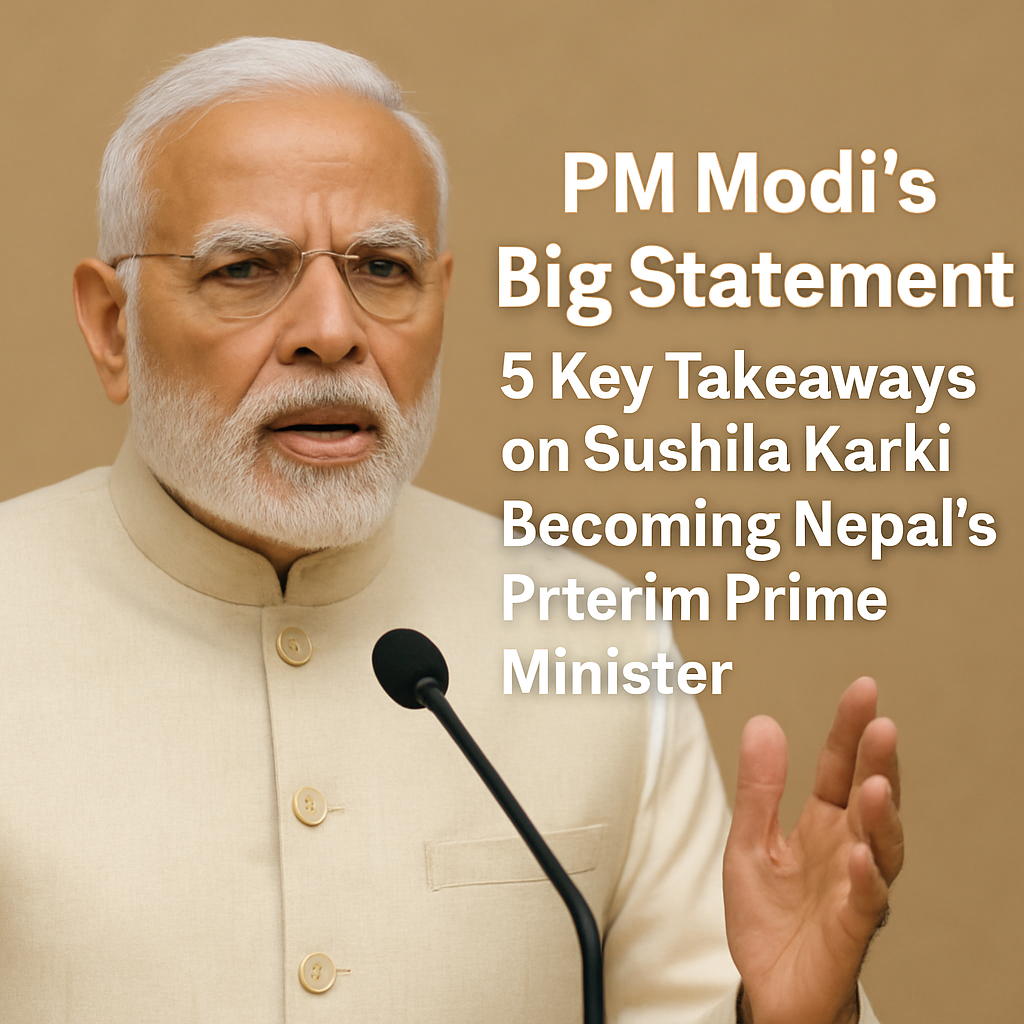
Prime Minister Narendra Modi was quick to respond to the new political reality in Nepal.
In a social media post, he wrote:
“I extend my best wishes to Right Hon. Mrs. Sushila Karki on assuming office as the Prime Minister of the Interim Government of Nepal. India remains firmly committed to the peace, progress, and prosperity of the people of Nepal.”
This statement highlights India’s consistent policy of supporting a stable, democratic, and prosperous Nepal.
India’s Official Stand
The Indian Ministry of External Affairs (MEA) also welcomed the formation of the interim government led by Karki.
In its official statement, the MEA emphasized:
- India’s role as a close neighbour and fellow democracy
- Commitment to long-term development partnerships
- Dedication to peace and stability in the Himalayan nation
This reflects India’s long-standing strategy of constructive engagement with Nepal, ensuring that bilateral ties remain strong even during political transitions.
Importance of Nepal’s Stability for India
Nepal’s stability has strategic significance for India due to:
- Shared Borders: India and Nepal share an open 1,750 km border, facilitating trade, tourism, and cultural exchange.
- Security Concerns: Political instability can create security challenges such as cross-border crime or migration pressures.
- Economic Cooperation: Hydropower projects, trade routes, and tourism links contribute to the economic growth of both nations.
Recent India–Nepal Cooperation
- India has invested in cross-border electricity transmission lines and railway connectivity projects.
- Cultural and religious tourism—particularly visits to Lumbini and Pashupatinath Temple—strengthens people-to-people ties.
- Joint efforts in disaster management and climate adaptation continue to grow.
Challenges Ahead for Sushila Karki’s Interim Government
While Karki’s appointment brings hope, her government faces several immediate challenges.
Restoring Law and Order
Nepal must quickly stabilize the situation, rebuild damaged infrastructure, and ensure that public trust is restored.
Drafting Political Roadmap
As an interim leader, Karki must guide Nepal toward free and fair elections, ensuring that democratic institutions remain robust.
Managing Economic Fallout
Protests and violence have disrupted trade and tourism. Economic revival and job creation will be key priorities.
How India Can Play a Supportive Role
India can assist Nepal through:
- Diplomatic Support: Facilitating political dialogue and encouraging inclusive governance.
- Economic Aid & Investments: Strengthening energy cooperation, trade, and infrastructure projects.
- Youth Empowerment: Partnering on education and technology programs to address the aspirations of Nepal’s young population.
Such collaboration can ensure regional stability and mutual growth.
Global Reactions and Regional Significance
The peaceful transfer of power to Karki has drawn cautious optimism from international observers.
South Asian nations and global powers view Nepal’s stability as crucial for regional security and economic corridors such as the India-Nepal-China trade routes.
Balancing Relations with China
Nepal’s new leadership will also have to balance ties with both India and China, ensuring that its sovereignty and development priorities remain intact.
Looking Ahead
Sushila Karki tenure as the first woman interim Prime Minister of Nepal symbolizes a new chapter in South Asian politics.
Her success will depend on inclusive governance, swift reforms, and cooperation with neighbouring countries, especially India.
 WhatsApp Channel